
Gas Analysers For Package Headspace Testing
EMCO manufactures a wide range of gas analysers for all gas flushing applications: food, pharmaceutical, life sciences, welding and more. From simple handheld oxygen analysers to highly sophisticated and custom instruments for high speed production lines. We utilise infra red, electrochemical, zirconia and optical sensors in our instruments. Whether you are looking for a reliable yet economical instrument or a custom instrument for an unusual application, EMCO can deliver a solution.
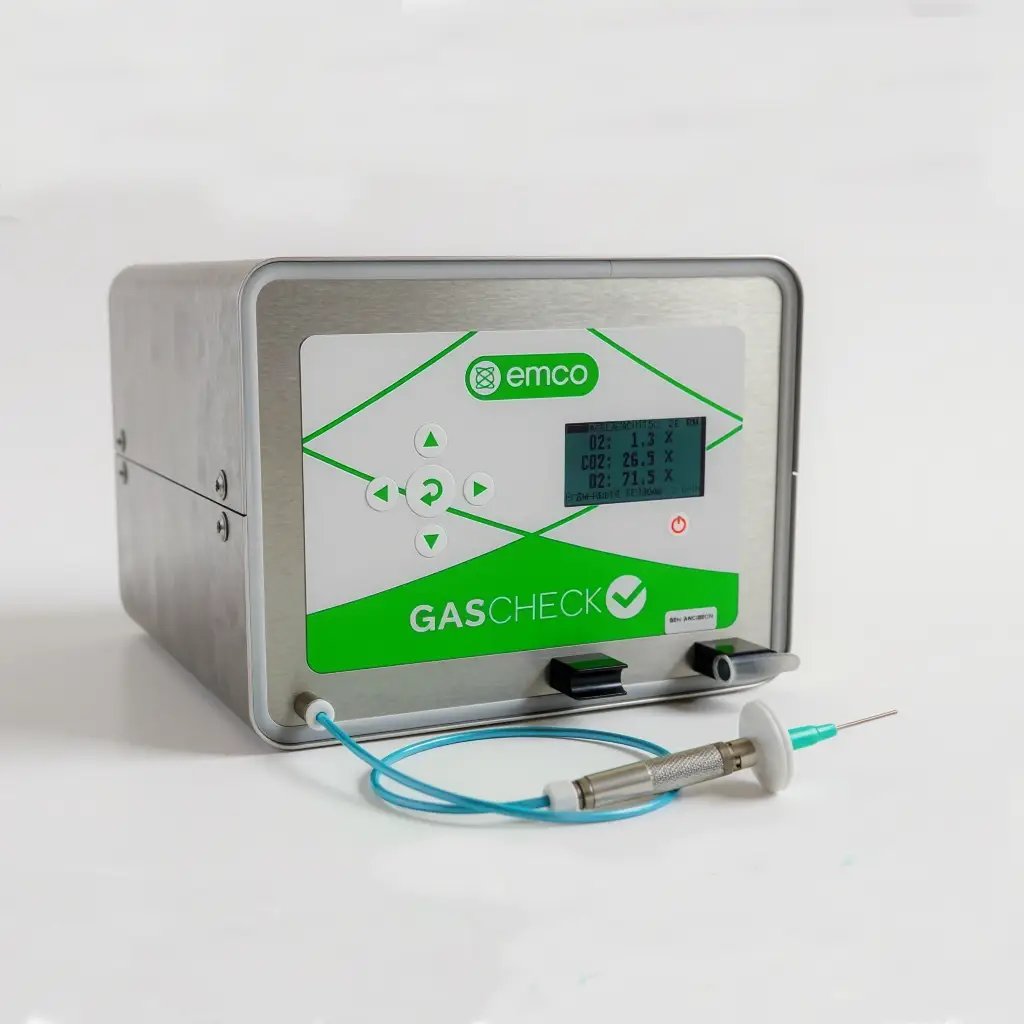
Gas Analysers For Food Production And Pharmaceutical Packaging
How do you know your gas flushing is actually working? You measure what is left inside the pack. A gas analyser samples the headspace of a sealed package and reports the oxygen and carbon dioxide concentration, which is the clearest single indicator of whether your modified atmosphere is correct and your seal has held.
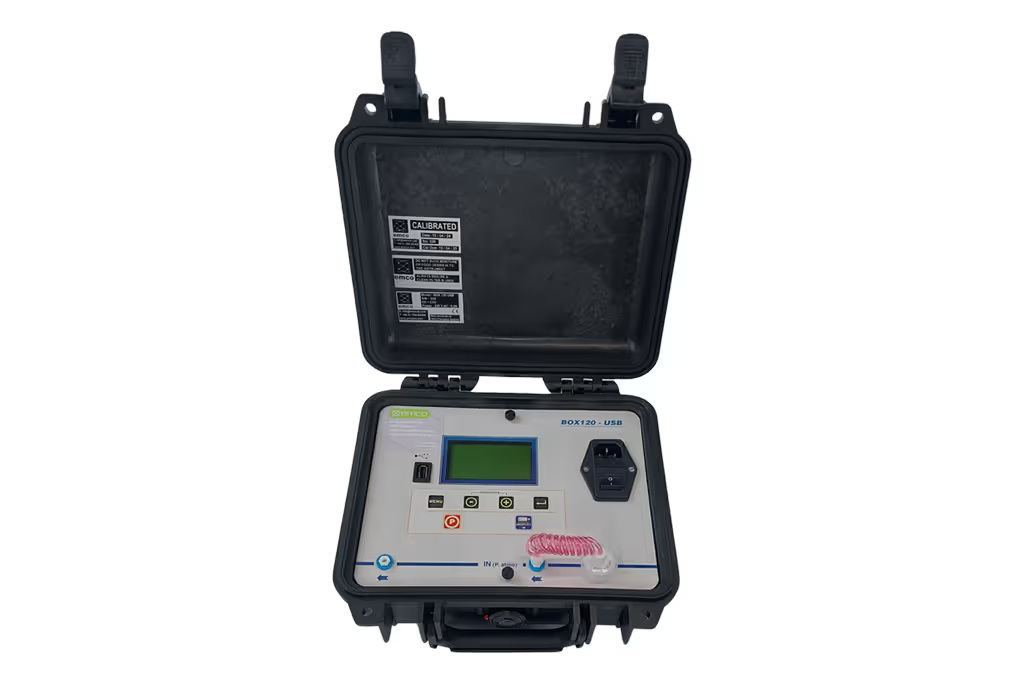
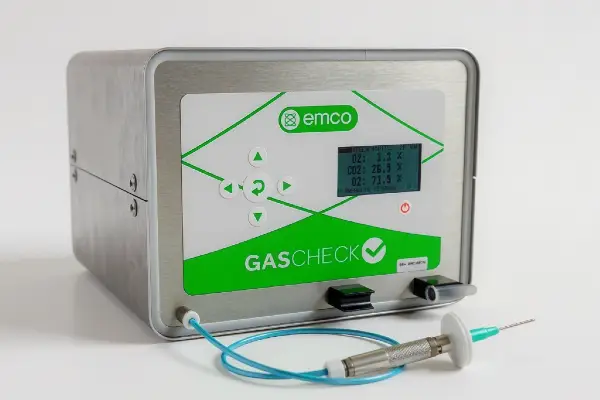
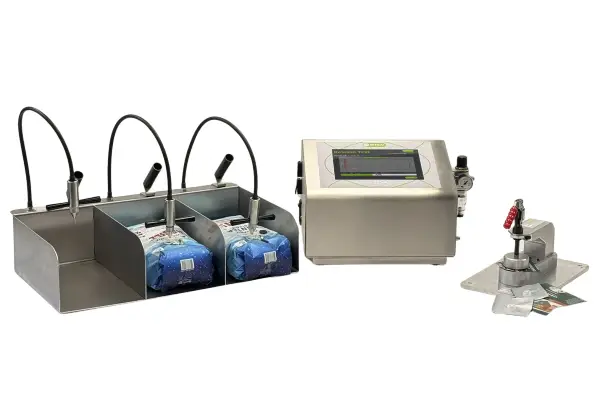
EMCO builds headspace analysers across the full range: handheld units for spot checks at the line, desktop systems that combine gas, leak and burst testing in one instrument, multi-pack analysers for high-throughput QC, and inline systems that optimise gas flow while production runs.
Gas Analysers For Food Production And Pharmaceutical Packaging
What Is Headspace Gas Analysis?
A gas analyser measures the atmosphere trapped inside a sealed pack, usually reporting oxygen and carbon dioxide with nitrogen calculated by balance. In modified atmosphere packaging that headspace is set deliberately at sealing, so the reading tells you whether the flush hit its target. Residual oxygen is the number that matters most: above specification, fats oxidise, colour fades and microbial growth accelerates well before the stated shelf life is up. Targets vary hugely by product. Many food applications aim for under 1% residual oxygen, red meat is deliberately flushed to 70 to 80% oxygen to hold colour, and pharmaceutical or vacuum formats often need measurement confidence below 0.5%, which is where sensor choice starts to matter.
Sensor Technologies Explained
EMCO builds analysers on four sensor technologies, and the right one depends on the application rather than a single spec sheet. Electrochemical sensors are the cost-effective standard for routine MAP quality control. Zirconia sensors trade some cost for longevity and accuracy in high-throughput or demanding environments. Infrared sensors suit CO2 measurement and applications needing long service life without frequent replacement. Optical sensors stand apart: they measure without extracting a gas sample, which makes them the only reliable option for vacuum packs, blister packs and other very low headspace formats where needle sampling would distort the reading. Matching sensor to application, rather than defaulting to one technology, is where most of the accuracy problems in this category actually come from.
Spot Checking Vs Continuous Inline Analysis
The operational decision most buyers are wrestling with is whether to sample or monitor continuously. Handheld and portable analysers suit spot checks at intervals through a shift, smaller production runs, and facilities without a fixed QC station. Desktop systems combine gas analysis with leak and burst testing in one sequence, useful where a full package check needs to happen at a defined point in the line. Multi-pack analysers test several packs simultaneously for higher-throughput QC. Inline systems sit permanently on the line and feed data continuously into process control, which suits high-volume food producers and pharmaceutical manufacturers who need to catch a drifting gas mixer or a worn sealing jaw before it becomes a batch of rejected stock rather than after.
Key Points
- O2, CO2 and N2 measurement in package headspace
- Infrared, electrochemical, zirconia and optical sensor options
- Handheld, portable, desktop, multi-pack and inline formats
- Optical sensing for extremely low headspace and vacuum packs
- Combined gas, leak and burst testing in one desktop instrument
- Multi-pack testing without self-adhesive septa
- Result logging and export for QC records and trend analysis
- Custom instruments for non-standard applications and high-speed lines
- Backed by the EMCO service level guarantee
FAQs About Gas Analysers And Package Headspace Testing
What does a gas analyser measure?
It measures the concentration of gases inside the headspace of a sealed package, most commonly oxygen and carbon dioxide, with nitrogen calculated by balance. The reading tells you whether the modified atmosphere matches your specification.
What residual oxygen level should I be aiming for?
It depends entirely on the product. Many food applications target below 1% residual oxygen, while high-oxygen red meat packs deliberately run at 70 to 80% to hold colour. Pharmaceutical and vacuum applications often require measurement well below 0.5%, which is where optical sensing becomes necessary.
Do I need a handheld or a desktop gas analyser?
Handheld analysers suit spot checks at the line and smaller operations. Desktop systems make sense when you need gas, leak and burst testing in one workflow, higher throughput, or automatic recording of results for QC documentation.
Can a gas analyser test very small or vacuum packs?
Conventional needle sampling removes a volume of gas that can distort the reading in low headspace packs. Optical sensors measure without extracting a sample, which makes them suitable for vacuum packs, blister packs and small pharmaceutical formats.
How often should packaging be tested?
Most QC regimes sample at start-up, after every changeover, and at set intervals through the run. The right frequency depends on line speed, product sensitivity and your customer specification, as retailers and pharmaceutical customers usually set their own minimum requirements.
Do gas analysers need calibrating?
Yes. Sensor drift is normal, and calibration keeps measurements traceable. EMCO provides calibration, service and certification for its instruments.



.avif)

%20Gas%20Analyser%20Thumbnail.avif)
