
Ethylene Control Systems For Storage And Ripening
With EMCO's collection of electronic instruments & active packaging absorbers, we can control ethylene in glasshouses, shipping containers & cold stores.
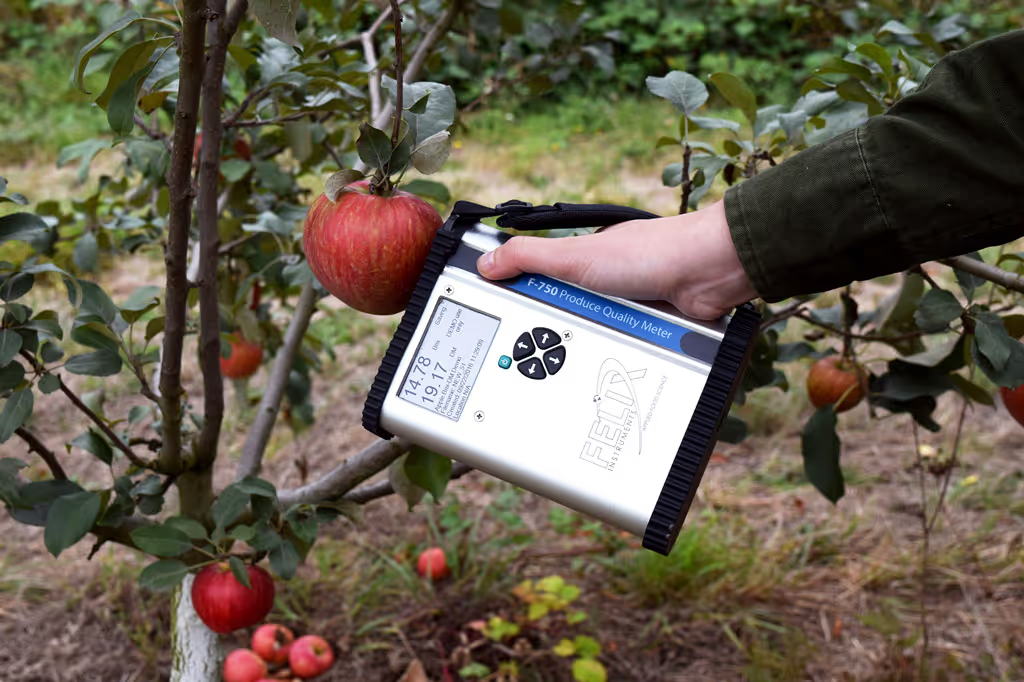
Ethylene Control Systems For Food Producers And Fresh Produce
Is ethylene your problem or your tool? Both, depending on the crop. It is the plant hormone that triggers ripening, so growers dose it deliberately to bring bananas, mangoes and tomatoes to condition on schedule, and strip it out just as deliberately to stop apples, lettuce and cut flowers softening in store.
EMCO supplies the instruments for both directions: analysers that measure ethylene at the concentrations that actually matter, scrubbing systems that remove it from a store, and controllers that dose and hold it at a set point.
Ethylene Control Systems For Food Producers And Fresh Produce
What Does Ethylene Do, And Why Does It Need Controlling?
Ethylene is a plant hormone that triggers and accelerates ripening, and it is active at extremely low concentrations — a few parts per million in a cold store is enough to shorten the life of sensitive produce. That makes it genuinely difficult to manage by judgement alone: you cannot see it, and by the time softening or discolouration is visible the damage is already done. Measurement has to come before control, because you cannot correct a level you cannot see. Climacteric produce such as bananas, mangoes and tomatoes continues to ripen after harvest and responds usefully to ethylene; sensitive produce such as apples, lettuce and carrots only suffers from exposure to it.
Removing Ethylene Versus Dosing It
Ethylene analysers measure concentration in glasshouses, cold stores, shipping containers and ripening rooms, in handheld and installed formats. Scrubbing and filtration systems remove ethylene from a store's atmosphere to slow ripening and hold quality through a long storage season or a long sea journey — the right choice for produce that needs to be held back. Ripening gas controllers work the other way, dosing ethylene and holding a target concentration with continuous monitoring and integrated flow control — the right choice for produce that needs to be brought on deliberately, most commonly tomatoes. Confusing the two is a common and costly mistake: a scrubber will not ripen anything, and a controller will not protect stock in transit.
Why Consistency Matters More Than The Headline Numbers
The commercial case for ethylene control is waste and consistency rather than any single measurement. Produce that arrives under-ripe is rejected; produce that arrives over-ripe is marked down; and the gap between the two is measured in days, not weeks. Growers, packers, importers and ripening operators use these systems to hit a retailer specification reliably rather than approximately, batch after batch. EMCO's tomato ripening equipment in particular is built around continuous monitoring and flow control specifically to cut ethylene consumption and cost while tightening that consistency.
Key Points
- Ethylene measurement in glasshouses, cold stores, containers and ripening rooms
- Handheld analysers for spot checks and installed systems for continuous monitoring
- Ethylene scrubbing and filtration to extend storage life
- Ripening gas controllers with continuous monitoring and integrated flow control
- Dedicated ethylene mix control for tomato ripening management
- Reduced ethylene consumption compared with uncontrolled dosing
- Consistent ripening to meet retailer specifications
- Suitable for growers, packers, importers and ripening operators
- Backed by the EMCO service level guarantee
FAQs About Ethylene Control Systems And Ripening Management
What does ethylene actually do to produce?
It triggers and accelerates ripening. In climacteric produce such as bananas, mangoes, melons and tomatoes, which continue ripening after harvest, that is useful and controllable. In ethylene-sensitive produce such as apples, grapes, lettuce and carrots it causes softening, discolouration and decay.
At what concentration does ethylene become a problem?
Very low. Sensitive produce can be affected at concentrations of around one part per million, which is why measurement matters more here than in most gas applications and why judging by eye is not viable.
What is the difference between a scrubber and a controller?
A scrubber removes ethylene from a store to slow ripening and extend storage life. A controller doses ethylene into a ripening room and holds it at a target concentration to bring produce to condition on a schedule.
Can ethylene be controlled in a shipping container?
Yes. Long sea journeys are one of the main applications, both for monitoring what is happening inside the container and for absorbing or scrubbing ethylene to protect the load in transit.
How much ethylene does controlled dosing save?
Continuous monitoring with integrated flow control replaces an open dose with a maintained set point, so gas is only added when the concentration falls. Operators typically find both consumption and cost drop while ripening becomes more consistent.
Do I need instruments or absorbers?
Absorbers are the simpler option for packs, cartons and small volumes, and are covered by our ethylene absorbers range. Instruments and control systems are for stores, containers, glasshouses and ripening rooms where the volume is large and the level has to be actively managed.


