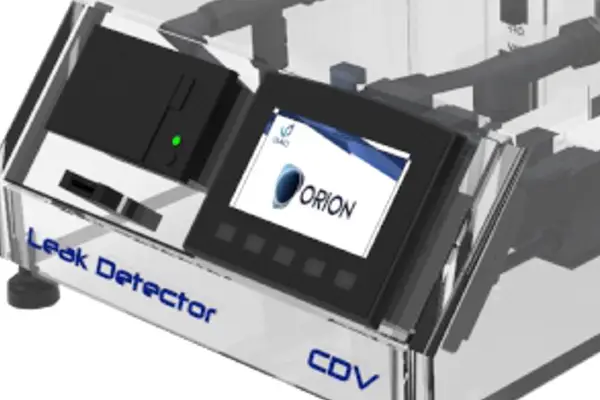
Package Leak Testers For Seal Integrity Testing
EMCO manufactures an innovative range of instruments to measure LEAKs in packages and gas cylinders, test BURST & VALVE opening pressures and measure POROSITY across selectively permeable membranes. Whatever the application, EMCO can design a LEAK, BURST & POROSITY Testing System.

Package Leak Testers For Food And Pharmaceutical Packaging
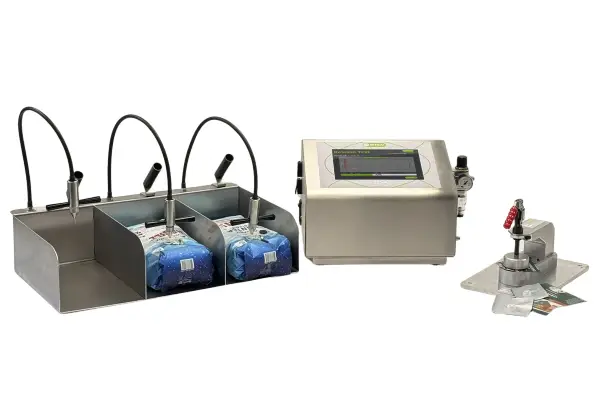
Why do packs fail in the supply chain when they passed inspection at the line? Because the leaks that cause returns are almost never visible. A channel leak in a seal or a pinhole in the film lets oxygen in slowly, and the pack only looks wrong weeks later on a shelf. Leak testing measures pressure change instead of relying on the eye, and our desktop instruments detect down to 10 microns.
The range covers both halves of the job: non-destructive instruments that tell you a pack has failed, and pressurised water baths and bubble emission testers that show you exactly where it failed.
Package Leak Testers For Food And Pharmaceutical Packaging
What Is Package Leak And Seal Integrity Testing?
Leak testing verifies that a sealed pack still holds its barrier after it has left the packing machine. It matters wherever the product depends on a controlled internal atmosphere: modified atmosphere food packs, coffee, pharmaceutical blisters and pouches, and anything vacuum sealed. A leak undoes the gas flush, admits oxygen and moisture, and quietly cuts shelf life with no visible sign at the point of packing. Non-destructive pressure and vacuum decay testing applies a controlled pressure differential to the pack and reads how it changes, giving a fast, repeatable pass or fail with no water and no mess, and detecting down to 10 microns on EMCO's advanced desktop instruments.
Locating A Leak Versus Screening For One
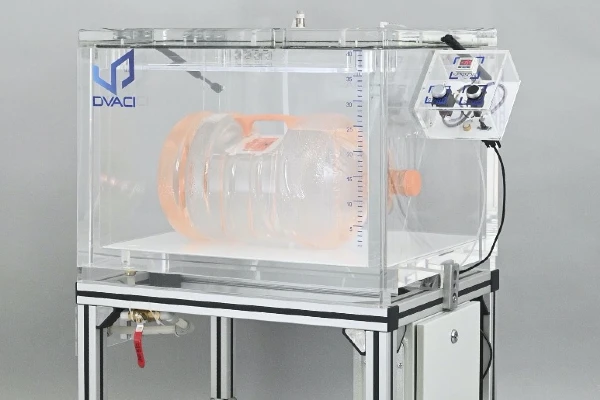
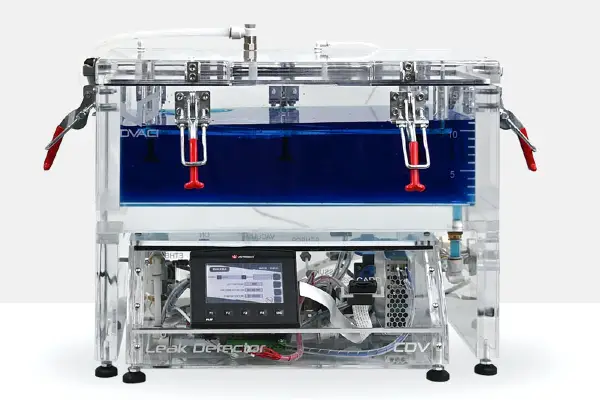
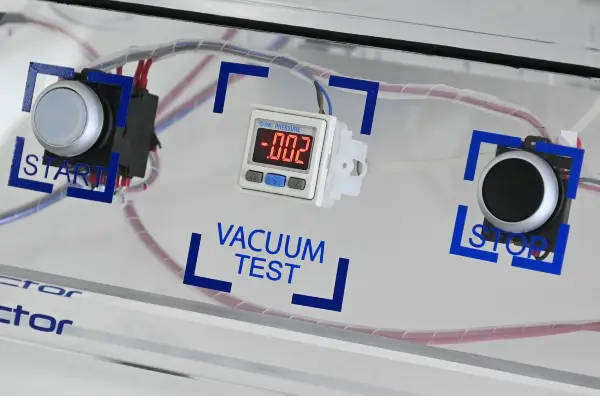
Decay testing answers whether a pack has failed. It does not show where. That is the job of a pressurised water bath or bubble emission tester, which puts the pack under vacuum in water so the escaping air stream marks the exact failure point, whether that is a channel leak in the seal or a pinhole in the film. Most QC programmes use both: decay-based instruments for routine production screening, and a water bath kept aside for diagnosing a failure or validating a new seal setting on the line. EMCO's DVACI water baths come as desktop or floor standing units with semi-automatic and fully automatic controllers, so the same test conditions repeat across shifts with very little operator training.
Why Burst Testing Sits Alongside Leak Testing
Leak testing asks whether the seal holds; burst testing asks how much pressure it takes before it does not. That distinction matters for anything stacked, air freighted or roughly handled, because a pack can be leak-tight and still too weak for the journey. EMCO's automatic water bath controller includes a transport test setting that simulates flight and mountain road profiles over extended test times, which is particularly relevant for pharmaceutical exporters and food producers shipping long distances. Every result, pass or fail, is stored with its parameters and exportable for QC records — the evidence base retailers and regulators increasingly expect as standard.
Key Points
- Leak detection to 10 microns on advanced desktop instruments
- Non-destructive pressure and vacuum decay testing
- Pressurised water baths to locate pinholes and channel leaks
- Bubble emission testers for precise failure location
- Desktop and floor standing DVACI water baths
- Semi-automatic and fully automatic controllers for repeatable conditions
- Integrated burst and seal strength testing
- Transport simulation for altitude and long-haul profiles
- Pass and fail recording with parameter logging and export
- Backed by the EMCO service level guarantee
FAQs About Package Leak Testers And Seal Integrity Testing
What size leak can be detected?
Our advanced desktop instruments detect leaks down to 10 microns. In practice the achievable sensitivity depends on pack size, film type and headspace volume, so it is worth testing your actual product rather than working from a specification alone.
What is the difference between a leak tester and a water bath?
A leak tester tells you whether a pack has failed. A water bath tells you where it failed. Most quality teams use decay-based instruments for routine screening and keep a water bath for investigating a failure or validating a new seal setting.
Is leak testing destructive?
Pressure and vacuum decay testing is non-destructive, so a passing pack can go back into stock. Water bath testing wets the pack and is destructive in practice, which is why it is used for diagnosis and validation rather than routine screening.
What is burst testing and do I need it?
Burst testing raises the pressure inside a pack until the seal gives way, which measures seal strength rather than seal integrity. It is worth doing if your packs are stacked, air freighted or handled roughly, because a pack can be leak-tight and still too weak for the journey.
Can the same instrument do gas, leak and burst testing?
Yes. Our TPC desktop and industrial systems run gas analysis, leak detection and burst testing in a single semi-automatic sequence, so one operator completes a full package check in one pass.
How do we keep results consistent between operators and shifts?
Use a controller with stored test methods. Our automatic water bath controllers hold pre-defined settings per product, so the operator selects the product rather than entering parameters, which removes the main source of variation between staff.