
Water Baths in Packaging Quality Control
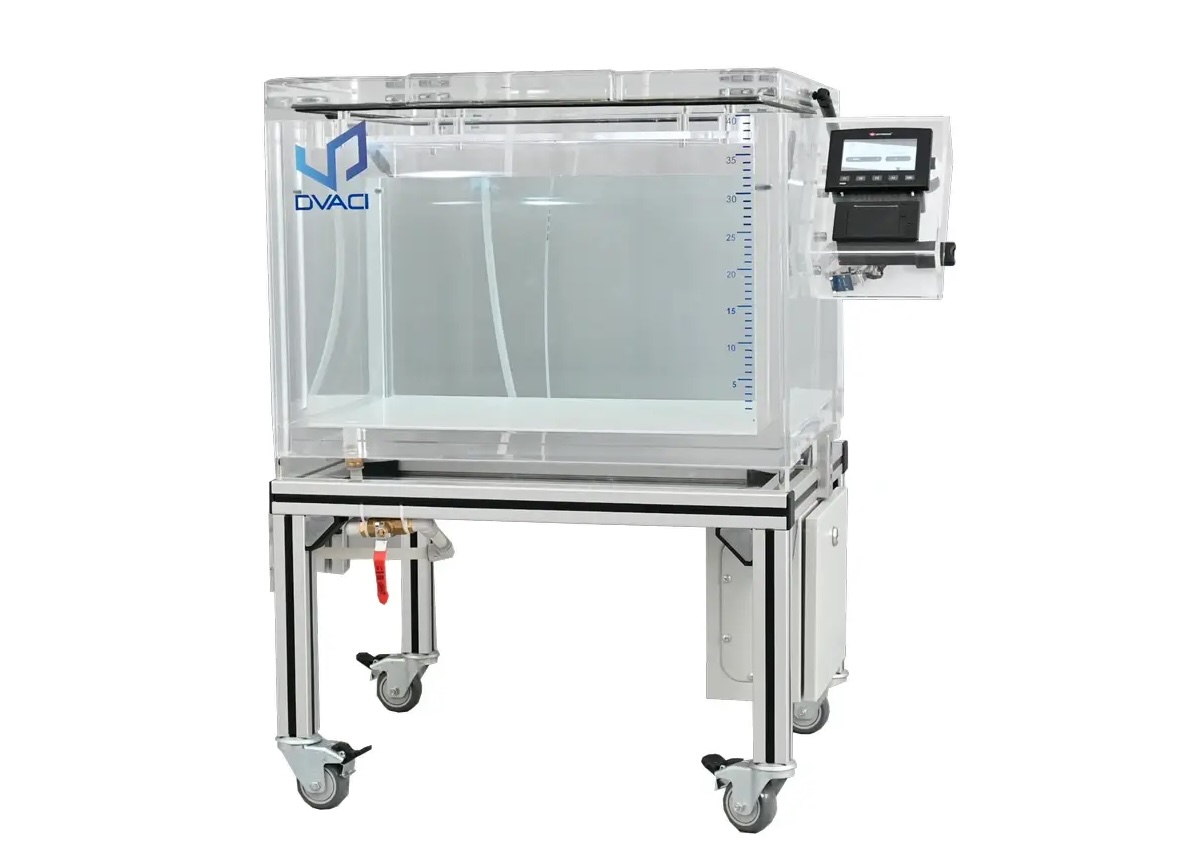
Water baths are widely used across food and pharmaceutical packaging. They are a straightforward method for routine seal integrity checks. In packaging applications, this usually means vacuum water bath systems.
In this article, Kevin Goodison, Head of Sales at EMCO, and Alex Hirst, Head of Operations, share practical insights from their experience supporting packaging quality control and seal integrity testing across regulated industries.
What Is A Water Bath?
A water bath leak tester is an instrument composed of:
- a sealed water-filled test tank
- and a controlled vacuum system.
How Vacuum Water Bath Testing Works
The test follows a simple, step-by-step process:
- The operator places the package in the chamber and fully submerges it in water
- The system applies a controlled vacuum, which lowers the pressure and causes the headspace inside the pack to expand
- If there is a leak, escaping gas forms bubbles in the water, making the leak location easy to see.
Why Water Baths Matter in Packaging Quality Control
Seal integrity is critical in food and pharmaceutical packaging, as leaks can cause contamination, compromise modified atmosphere packaging (MAP), and shorten shelf life.
Water bath testing provides a straightforward way to verify that seals are performing as intended and remain consistent across a production run.
On the production floor, water baths offer quick, visual feedback. They make it easier to spot issues like damaged sealing jaws, debris in the seal area, or gradual machine drift, so problems can be addressed before products reach the customer.
Water baths are commonly used alongside other packaging testing methods across multiple regulated sectors, including:
- Food and beverage
- Pharmaceutical
- Medical device
- Cosmetics and personal care
- Chemical and industrial.
Typical Applications in Packaging Testing
In addition to seal integrity testing, water baths can be used for burst screening. For burst testing, operators apply increasing vacuum levels to determine whether a pack holds or ruptures over time.
Vacuum water bath systems can also be used for altitude simulation. By mimicking pressure changes during air or mountain transport, operators can assess how packaging performs under changing conditions.
For both burst and altitude testing, operators drain the water but use the same vacuum chamber and controller.
Recognised Standards and Industry Acceptance
Vacuum water bath testing is supported by well-known industry standards, including:
- ASTM F2096 for bubble emission leak testing
- ASTM D3078 for vacuum leak testing
- and ASTM D6653 for altitude simulation testing.
As Kevin Goodison explains, ASTM-recognised methods remain widely accepted because auditors understand purpose, limitations, and outcomes.
Key Benefits of Vacuum Water Bath Testing
Vacuum water bath testing remains widely used because it has intuitive operation that suits routine quality control without extensive training.
It is also operator-efficient, allowing tests to be carried out quickly with minimal setup, which makes it well-suited to busy production environments.
Finally, vacuum water bath testing is a cost-effective entry point to seal integrity testing. It is often the first method organisations adopt when formalising their packaging quality control processes.
Limitations
Vacuum water bath testing relies on visual checks rather than numerical measurements, so results can depend on operator judgement, especially for small or intermittent leaks.
The method is also not suitable for all packaging materials or formats, such as packs with very little headspace, as fewer bubbles may form. However, this issue can be overcome by using a needle connected to an external port. When the vacuum is applied, air is drawn through the needle into the pack, causing it to expand and reveal any leaks.
Finally, results are only reliable when the vacuum level and dwell time are set and controlled correctly.
According to Alex Hirst, teams often struggle to agree on the right vacuum level and dwell time without expert support.
Water Baths vs Instrument-Based Leak Detection
Because vacuum water bath testing is visual rather than quantitative, teams often use it alongside instrument-based leak detection.
Systems such as the TPC provide objective, numerical data on leakage, reducing operator judgement and supporting validation and audit requirements.
Used together, these types of packaging testing equipment give quality teams both the data required for compliance and the visual insight needed to resolve issues quickly.
When a Water Bath Is the Right Choice
- Leak path identification: It clearly shows where a seal is failing
- Routine seal integrity checks: It’s well suited to regular quality control checks
- Entry-level compliance testing: It’s a cost-efficient starting point for meeting basic seal integrity requirements
- Production troubleshooting: It helps teams quickly identify sealing issues on the line.
When a Water Bath Is Not Enough
- When leak rate quantification is required: It does not provide numerical leakage data
- When materials are unsuitable for immersion: Paper-based and porous packaging formats don’t perform reliably in water
- When headspace is insufficient: Without headspace, leaks cannot be revealed
- When fully objective data is needed: Instrument-based methods are better suited to validation and audit-driven testing.
Why Not All Water Baths Are the Same
Not all vacuum water bath systems offer the same level of control or consistency.
Manual systems rely on operators to set vacuum levels using levers and gauges, which can lead to variation between tests.
Electronically-controlled units, such as the Model S, reduce variability by applying precise vacuum settings.
More advanced instruments, such as the Model A allow operators to use pre-programmed test recipes for consistent testing across different pack formats.
Some systems, like the Model P, also include altitude simulation testing.
Modern units also include data logging and pass/fail reporting, supporting traceability and audit requirements.
Hygiene, Maintenance, and Calibration
Because the test uses water, poor bath management can increase contamination risk, especially in food and pharmaceutical settings.
Cleaning the system regularly and using antibacterial treatments helps prevent microbial growth during routine quality control.
Kevin and Alex recommend annual calibration to keep vacuum levels and test conditions accurate over time.
Calibration also helps teams meet ASTM requirements and stay audit-ready.
How EMCO Can Help You Set Up an Audit-Ready Testing Protocol
Because vacuum water bath testing depends on how the test is set up, reliable results depend on the test conditions, not just the equipment.
Setting the right vacuum levels, exposure times, and test procedure turns a subjective visual check into a repeatable, audit-ready process.
This is where EMCO stands out. Drawing on Kevin’s and Alex’s expertise, we help manufacturers define and validate test methods - not just supply equipment - so results are consistent, defensible, and audit-ready.
If you’re reviewing your seal integrity testing or want a second opinion on your water bath setup, get in touch.
Insights in this article are informed by EMCO’s packaging testing specialists Kevin Goodison and Alex Hirst, who have extensive experience in seal integrity testing across regulated industries.