
Gas Mixers For Modified Atmosphere Packaging
EMCO offers reliable mechanical gas mixers with or without an electronic interface and pressure control. We also offer fully electronic thermal mass flow sensors to control and optimise gases to exceptional accuracy. Uniquely, we can also monitor high pressure pipelines of gas (without a bypass) with an in line sensor that is extremely long lasting and can measure at pressures of up to 16bar. Whatever your mixing requirement, EMCO can offer a solution.
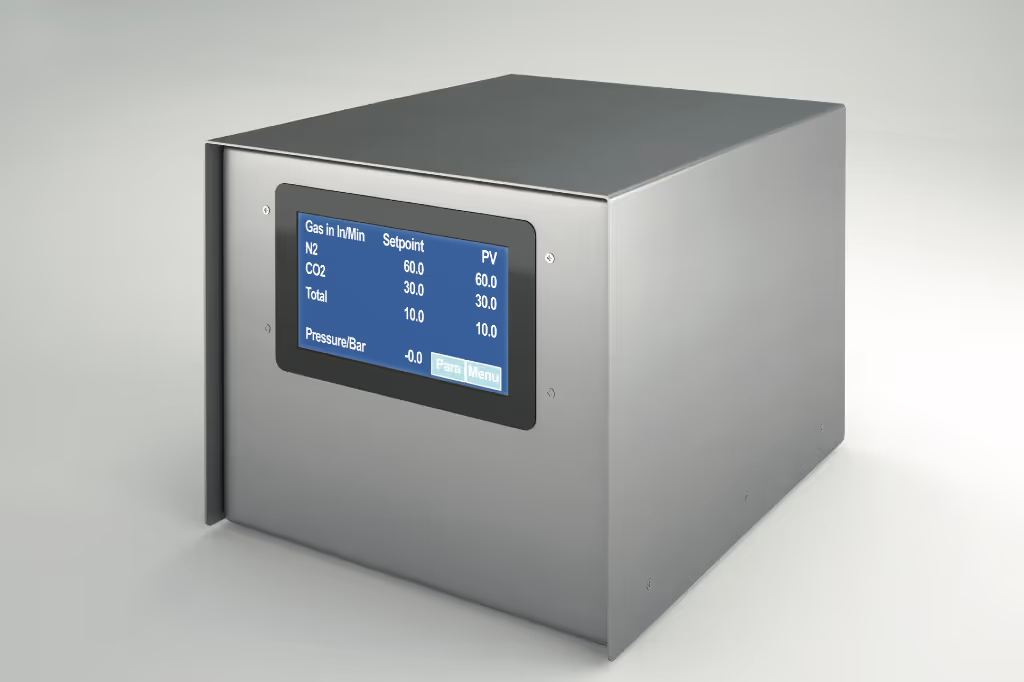
Gas Mixers For Food Producers And Pharmaceutical Packaging
If your headspace readings drift, is the packing machine at fault or the gas mix? Usually the mix. A mechanical mixer set months ago will wander as line demand and supply pressure change, and nothing downstream will flag it until the analyser does. Measuring the blend at the pipeline, not just in the pack, is what closes that gap.
EMCO supplies mechanical mixers with optional electronic interface and pressure control, fully electronic thermal mass flow systems for high accuracy blending, and an inline sensor that verifies high pressure pipelines at up to 16 bar without a bypass.
Gas Mixers For Food Producers And Pharmaceutical Packaging
What Does A Gas Mixer Do?
A gas mixer blends two or more gases to a set ratio and delivers them at the pressure and flow a packing machine needs. In modified atmosphere packaging that usually means nitrogen and carbon dioxide, sometimes with oxygen, in proportions set by the product. Buying pre-mixed cylinders is simple but expensive at volume and locks in a single blend; on-site mixing costs less per cubic metre and lets the ratio change the moment a product or specification does. That flexibility matters as much to a pharmaceutical manufacturer validating a new formulation as it does to a food producer switching product lines on the same equipment.
Mechanical Versus Electronic Mixing
Mechanical mixers set the ratio with proportioning valves and remain the reliable, cost-effective workhorse, available with or without an electronic interface and integrated pressure control. Fully electronic thermal mass flow systems trade some upfront cost for exceptional accuracy, actively controlling and optimising gas delivery and holding the ratio steady as line demand and supply pressure vary through a shift. Which one earns its cost depends on tolerance: a nitrogen flush for a snack pack is forgiving, while a pharmaceutical inert headspace or a red meat pack relying on a precise oxygen level for colour is not. EMCO also supplies an inline sensor that verifies concentration directly in high pressure pipelines at up to 16 bar without a bypass, closing the gap between what the mixer is set to do and what is actually reaching the pack.
Why Accurate Mixing Is A Cost Control Measure
Gas is a consumable, and over-flushing is invisible on a profit and loss account until someone measures it. Pairing a mixer with a flow optimiser lets manufacturers cut consumption without dropping below specification, reducing both spend and the associated carbon. This is why gas mixers sit at the centre of EMCO's work with food producers and pharmaceutical manufacturers alike: the equipment pays for itself in gas saved as much as in quality assured. Mixers are also used in welding and laboratory applications, and EMCO builds custom blending systems where a standard configuration does not fit.
Key Points
- Mechanical mixers with optional electronic interface and pressure control
- Fully electronic thermal mass flow blending for high accuracy
- Inline pipeline sensor measuring at up to 16 bar without a bypass
- Long sensor service life under continuous high pressure
- Stable ratios as line demand varies
- Lower gas cost per pack than pre-mixed cylinders
- Blend flexibility for new products and changing specifications
- Pairs with our flow optimiser to reduce consumption
- Custom blending systems for non-standard applications
- Backed by the EMCO service level guarantee
FAQs About Gas Mixers For Modified Atmosphere Packaging
Should we mix gas on site or buy pre-mixed cylinders?
Pre-mixed cylinders make sense at low volume or where you only run one specification. On-site mixing is usually cheaper per cubic metre at production volume and lets you change the blend when a product or customer specification changes, without waiting on a delivery.
What is the difference between a mechanical and an electronic gas mixer?
A mechanical mixer sets the ratio with proportioning valves and is simple, robust and inexpensive. An electronic mixer uses thermal mass flow sensors to control each gas actively, holding the ratio far more precisely and correcting for changes in demand and supply pressure.
How accurate does the gas mix need to be?
It depends on the product. A snack pack flushed with almost pure nitrogen is forgiving. Products relying on a specific carbon dioxide concentration for microbial control, or on retained oxygen for colour, need tighter tolerances because a few percentage points changes shelf life.
Can we check the mix without stopping the line?
Yes. Our inline sensor measures gas concentration directly in the pipeline at up to 16 bar without a bypass, so the blend is verified continuously rather than inferred from headspace readings after the fact.
Will a gas mixer reduce our gas costs?
Usually, on two counts. Mixing on site costs less per cubic metre than pre-mixed supply, and pairing the mixer with a flow optimiser reduces the volume flushed per pack. Most sites find they were over-flushing before they measured it.
Can you build a mixer for an unusual gas or application?
Yes. We design and build custom gas control and blending systems where a standard configuration does not fit, including applications outside food packaging.


