
Pharma Packaging Testing: How To Improve Accuracy
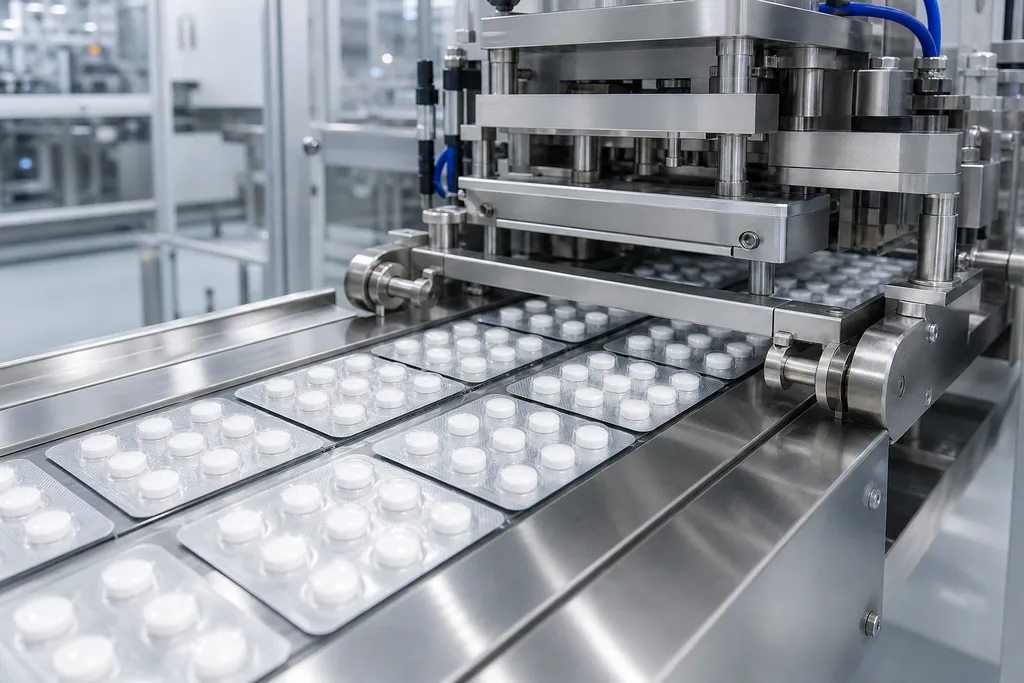
Precise pharmaceutical packaging testing is essential to ensure medicines remain safe and effective from manufacturing to patient use. Changes in headspace gases can affect a product’s sterility, stability, and shelf life.
When this happens, manufacturers can face regulatory investigations, product recalls, production delays, and supply disruptions.
That is why the test method must be sensitive enough to detect very small changes in gas composition as the package moves through storage, handling, and distribution.
In this article, the EMCO team explains the challenges of measuring gases in pharmaceutical packaging and how optical gas analysis supports accurate headspace gas measurement.
What Is Optical Gas Analysis (OGA)?
Optical Gas Analysis (OGA) is a packaging testing method that measures gases inside a sealed container using a needle-based sampling system. It is particularly suited to the very small headspaces typically used in medicine packaging.
By measuring O₂ concentration, OGA provides direct insight into the condition of the package headspace.
Rather than providing a simple pass-or-fail result, it delivers quantitative data that can be measured and tracked over time.
Optical gas analysis is often used alongside other test methods to build a more complete picture of pharmaceutical packaging performance.
Limitations of Standard Gas Analysers
Standard gas analysers are widely used in pharma packaging testing. But their performance depends on the pack format and how the test is applied.
Factors such as headspace size, container rigidity, closure design, and test setup influence the sensitivity and precision of these methods.
When working with very small headspaces or low oxygen volumes, these techniques can be pushed close to their limits or require carefully controlled conditions to deliver consistent results.
This is why choosing the right test method matters.
How Optical Gas Analysis Improves Accuracy in Pharma Packaging Testing
Optical gas analysis provides highly sensitive ppm-level oxygen measurement, making it particularly useful for low-headspace pharmaceutical packaging.
Because OGA produces quantitative O₂ data, it allows tracking small changes in gas concentration over time and builds a clearer picture of how medicine packaging performs during storage and distribution.
The method is also highly repeatable. Defined test conditions reduce inconsistencies, making it easier to generate consistent, comparable results across batches and test programmes.
Pharmaceutical Applications of Optical Gas Analysis
Optical gas analysis is particularly well suited to vials, pre-filled syringes, ampoules, and blister packaging.
OGA is commonly used in stability studies and shelf-life verification, where measuring headspace gases at different stages helps assess whether packaging continues to protect the product as intended.
It is also widely applied in R&D, process optimisation, and failure investigation. In these settings, quantitative gas data makes it easier to understand how changes in materials, sealing parameters, or handling conditions affect package performance.
The TPC Opti Optical Gas Analyser
The TPC Opti is an optical gas analysis system designed for pharmaceutical packaging testing.
The system uses a state-of-the-art optical oxygen sensor located inside the needle, allowing it to measure oxygen directly inside a package. Because it does not rely on a pump, the TPC Opti can accurately measure oxygen levels even in vacuum headspace packaging.
This system provides precise O₂ readings and calculates the package’s nitrogen (N₂) content, supporting reliable, quantitative headspace gas analysis data.
With its desktop design, the TPC Opti can be used across laboratory, R&D, and quality environments, supporting method development, investigation work, and routine testing as needed.
How EMCO Can Help
At EMCO, we support manufacturers with a full range of pharmaceutical packaging testing and gas analysis solutions, including optical gas analysis.
If you want confidence in how your pharma packaging performs after release, we can help. Our team works with you to identify the most appropriate test methods for your product and pack format, whether that involves OGA or conventional gas analysis.
We can conduct sample testing to help you identify the most appropriate testing approach, so you can make informed, data-backed decisions.
Get in touch to talk through your packaging testing requirements.