
How NIR Is Transforming Coffee Quality Control
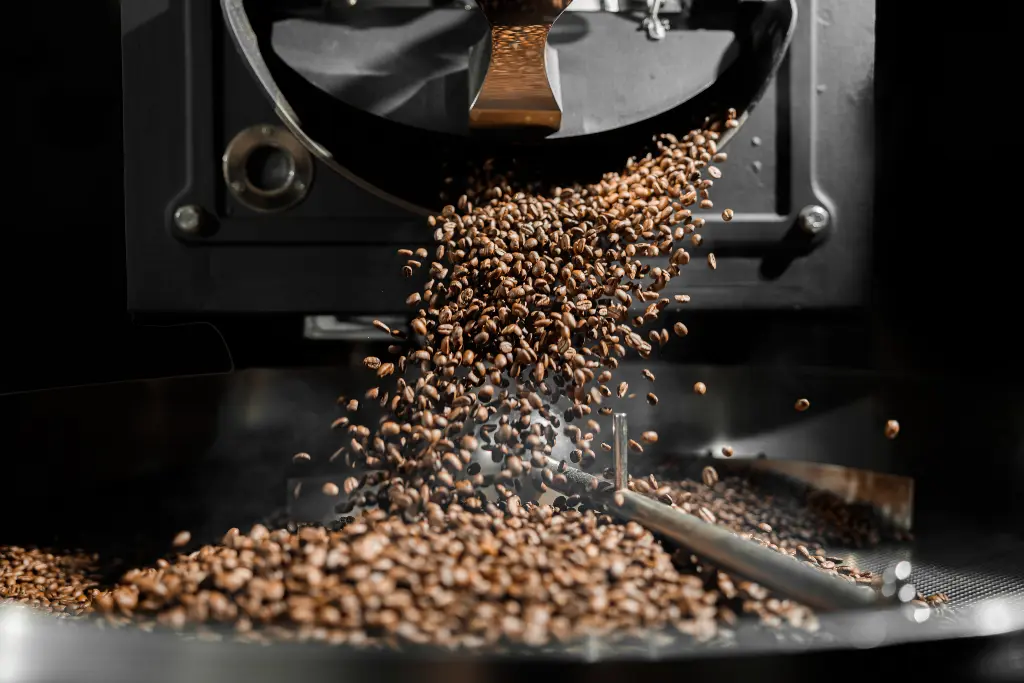
Maintaining consistent quality is one of the biggest challenges in coffee production.
Traditional QA methods often rely on manual sampling and laboratory testing, which can be time-consuming and only provide point-in-time measurements.
NIR technology for coffee roasting provides a faster, real-time approach to coffee quality control.
By measuring key parameters during production, NIR systems help operators monitor roasting conditions more closely and make faster process adjustments where needed.
Why Coffee Quality Control Is Challenging
Quality assurance in coffee production can be difficult to manage because coffee beans and roasting conditions can change from batch to batch.
Variability in Green Coffee Beans
Raw bean characteristics strongly affect how coffee roasts. Different varieties, origins, and harvests can respond to heat differently.
Moisture Variation
Moisture content can vary between bean batches, and even small changes can affect roast quality, aroma, flavour, and colour.
Roasting is Highly Sensitive
Fluctuations in temperature, airflow, and roast time can influence flavour and roast consistency.
Traditional Quality Control Has Limitations
Conventional oven-drying methods can take several hours, while faster moisture balances can still take between 7 and 25 minutes to generate a result. This can delay the detection of issues during production.
These methods also only provide measurements at specific moments in time and typically analyse small samples. This can make it harder to monitor the full production process.
Traditional quality control also relies on operator experience and process knowledge. As production lines become faster and experienced staff become harder to retain, achieving consistent roast quality can be more difficult.
Why Real-Time Analysis Matters in Modern Coffee Production
Today, consumers expect consistent flavour and quality, especially in premium coffee products where small variations in roast profile are more noticeable. This makes roast consistency a key priority.
At the same time, coffee producers are under pressure to reduce waste and work more efficiently in faster production environments.
Real-time analysis helps operators make faster, more informed production decisions.
Some NIR systems can provide at-line measurements in around 5 seconds.
How NIR Technology Works
Near-infrared (NIR) technology measures how a product absorbs light at specific near-infrared wavelengths.
This allows the system to measure key production parameters quickly and without damaging the product.
In coffee production, NIR technology can be used to measure properties such as:
- Moisture
- Degree of roast (DOR)
- Caffeine and composition indicators
- Roast development indicators.
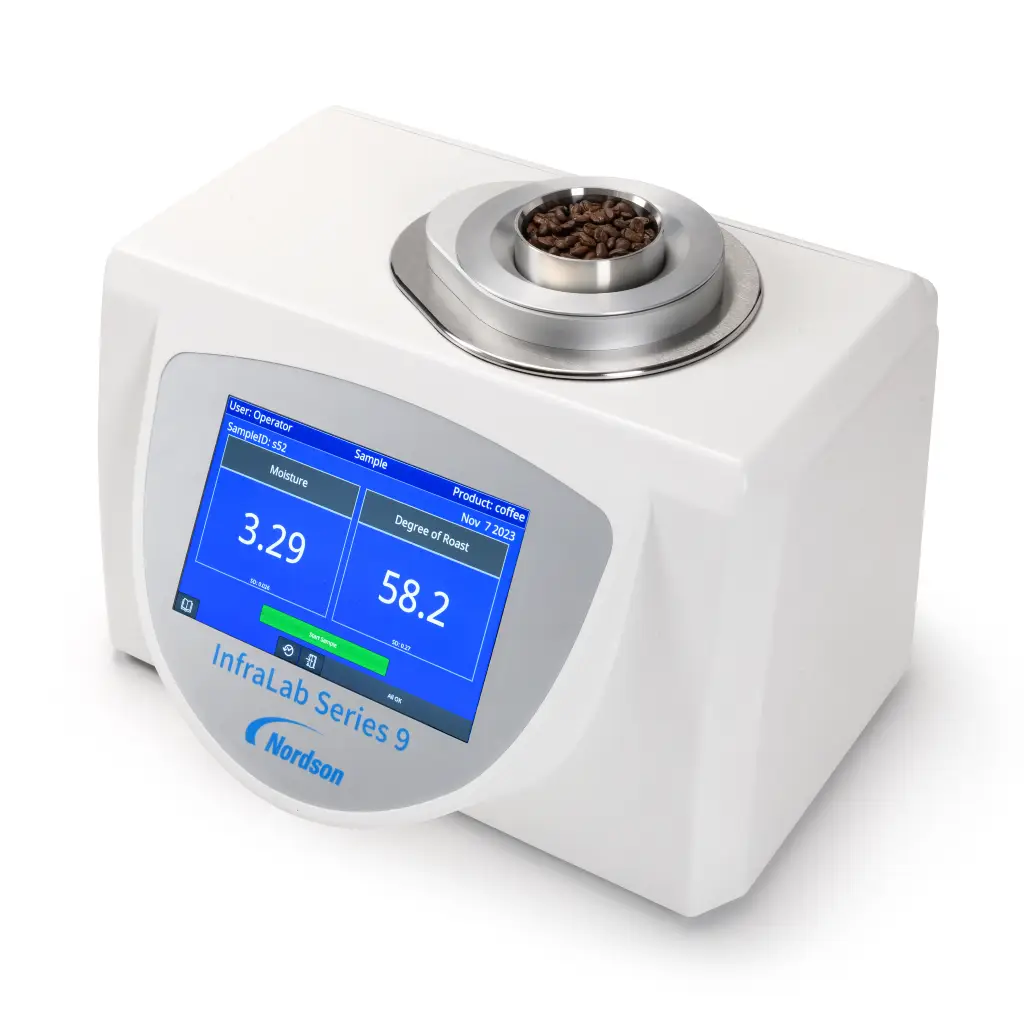
Some NIR systems, like the Infralab Series 9, can measure both moisture and degree of roast (DOR) from a single sample.
How NIR Improves Coffee Roasting Quality Control
More Consistent Roast Profiles
NIR systems can be designed to maintain reliable measurements across different bean types, blends, and roast colours. This helps reduce variation between batches.
Faster Decision-making
Faster feedback helps operators react more quickly to variation during production and improve product consistency.
Improved Production Efficiency
By minimising the risk of over- or under-roasting, NIR can help improve energy efficiency and overall production performance.
Reduced Product Waste
Better process control can also help reduce rejected batches and unnecessary rework.
And, as NIR measurement is non-destructive, no product is lost during testing.
Improved Brand Reputation
Consistency across batches also helps build customer trust and long-term loyalty.
Where NIR Can Be Used in Coffee Production
Near-infrared technology can provide continuous feedback during coffee production.
Green Coffee Bean Assessment
NIR systems can help assess the moisture content and condition of green coffee beans before processing begins.
Drying Processes
NIR instruments can provide rapid moisture measurements to help operators avoid over- or under-drying beans.
Roasting Lines
NIR technology can monitor parameters such as moisture and degree of roast (DOR) during roasting.
Post-roast Quality Verification
After roasting, NIR analysis can help verify that coffee products are still within quality targets before packaging.
NIR as a Support Tool
NIR technology is designed to support roasting expertise rather than replace it.
Experienced staff are still important; real-time data can help them respond to process changes more quickly.
Some instruments require little operator training. This helps simplify routine quality monitoring and can help bridge experience gaps in large-scale and multi-site roasting operations.
Coffee Quality Assurance Solutions
At EMCO, we provide NIR analysis solutions for food and beverage production, helping manufacturers improve process control, product consistency, and production efficiency.
We support customers throughout implementation and ongoing operation, including:
- Sample testing
- System implementation
- Calibration
- Maintenance
- Troubleshooting.
Get in touch to discuss your requirements.
Insights in this article are informed by EMCO’s process control specialist Kevin Goodison, who has extensive experience helping food and drink manufacturers improve production processes through measurement technologies.